Remove Dr Cleaner Mac
Mac Cleaner is a utility application which helps you remove unwanted files and optimizes your Mac. It usually comes with features such as RAM cleaner, Junk and temp files remover, disk cleanup, memory cleaner and optimizer to thoroughly clean & maintain your Apple computer’s health. Dr cleaner mac free download - Dr. Cleaner, Dr Cleaner, Dr Cleaner Pro, and many more programs. Free up more space, delete junk files, find and remove similar photos, and remove big videos. In order uninstall Dr. Cleaner 2.0.0 and other programs accurately and thoroughly, you should take a note about the following removal steps and tips. Download Mac App Removal Tool. Available options to uninstall Dr. Cleaner 2.0.0 on Mac. Option one - remove Dr. Cleaner 2.0.0 in the most traditional way. Well now, I guess a Mac can have some problems after all! Unexpected issue arose and since I was already using Dr. Cleaner, I decided to see what the Dr. Antivirus would show. Found two issues but had to pay to remove them. As the saying goes, you only get what you pay for. Bought it, cleaned it and fixed the problem.

After being used for years, your iMac/Macbook could be clogged with junks and run slowly. To keep the Mac clean and speed up the computer, many users will use a Mac cleaner software becuase the kind of software can scan out all the stuffs that can be safely removed on the Mac for the users. That could save users lots of trouble, especially for those who know little about tech product.
You can find a bunch of software if you google 'Mac cleaner'. Here we introduce Dr. Cleaner. It is recommendable because this all-in-one software has all you want about a Mac cleaner:
Clean junk files;
Scan out big files;
Remove duplicate files to free up space;
Display information of installed applications on your Mac so that you can identify which apps are eating up your space.
Another draw of Dr. Cleaner is its user-friendly interface, which is very neat and straight-forward. And its cute animation adds more fun to the cleaning and optimization. Click and get Dr. Cleaner from Mac App Store:
Part 1. How to Use Dr. Cleaner to Clean Up Your Mac
When open Dr. Cleaner on your Mac, you'll see the main window with five options: Junk Files, Big Files, Deplicate Files, App Manager, More Tools. I'll explain what these features do and how to use these features in detail.
Junk Files
To clean junk files is the first reason why a user want to get a Mac cleaner. Dr. Cleaner can scan out all the junk files that are safe to delete, including application caches, application logs, iTunes temperary files, mail caches, files on trash can, browser cache. To clean junk files:
Choose 'Junk Files'.
Click 'Scan'.
After scanning, select files that you don't need.
The Adobe Photoshop for Mac family of products is the ultimate playground for bringing out the best in your digital images, transforming them into anything you can imagine and showcasing them in extraordinary ways. Adobe Photoshop - Get all the state-of-the-art editing, compositing, and painting capabilities in industry-standard software plus tools that let you and motion-based content. Photoshop dmg mac.
Click 'Remove' on the bottom.
Big Files
Big files, such as movies, music, could be the culprit for the slow Mac. Dr. Cleaner can help you identify userless big files (that's the files with size larger than 10 MB). After the files are scanned out, you can filter the results based on size, date, name of the files. To avoid mistaken deletion, there is lock feature that allows users to lock important files to white list, which is very thoughtful.
(You may like: How Do I Remove Big Files on MacBook Air/Pro)
Choose 'Big Files' > 'Scan'.
Select the files that you don't need. (You can better identify the files with filter buttons).
Click 'Next'.
Remove the files to trash or delete permanently.
Duplicate Files
This feature is to search duplicate files on your Mac. If you don't need multiple copies of a file, you can then remove extra copies to free up space. What's good about Dr. Cleaner's deduplication feature is that it allows you to preview the files before deleting the copies.
Tip: To save time, Dr. Cleaner scans out duplicate files that are more than 68 KB in size.
Choose 'Duplicate Files'.
Drag folders that you would like to scan to the program.
Select the duplicate files to get rid of. You may choose 'Auto Select', which automatically save one copy of the file and select the extra copies to delete.
Click 'Next' > 'Remove' to confirm your selection.
App Manager
This feature can show you how much space that each app occupies on your Mac. And if you barely use the apps, you should delete the apps to get more space. Please notice that the program won't show the information of default apps of macOS. Also, you need to upgrade the program to Dr. Clean Pro to delete apps and app data. Otherwise, you can manually uninstall the apps by yourself.
(Learn More About Uninstall Applications on Mac)
Click 'App Manager'.
Choose 'Scan'.
You'll see all the apps with the information of size, installed date, last opened date.
If you're using Dr. Clean Pro, select the apps and click 'Next' > 'Remove'.
More Tools
This option recommends related apps that Mac or iPhone users might be interested in.
Part 2. Is Mac Cleaner Really Safe?
Some users are concerned that by using Dr. Cleaner, they might delete important files without noticing it. Well, you shouldn't be worry about that. One of the responsibilites of the cleaning software is to identify the files that are safe to delete. None of the useful files will be included.
What's more, when it comes to delete media files, documents, apps, Dr. Cleaner will remind you to confirm your selection or allow you to preview the files before deleting. Therefore, so long as you double check what you are going to delete, the files that you need will be safe and sound on your Mac.
Part 3. Alternative to Dr. Cleaner
If you want to free up space on Mac without Dr. Cleaner, there is another mac cleaner recommended here, called FonePaw MacMaster, which is easy to use. It can scan the system junk files, duplicate items, unneeded files and large & old files on your MacBook and then, you are able to remove them out of the Mac computer with one click so that your Mac will run faster than before.
- Hot Articles
- My Mac Running Slow, Here is Why and How
- Tricks to Delete Useless iTunes Files for Mac
- How to Clean My Mac Hard Drive
- Clear Safari/Chrome/Firefox Browser Caches on Mac
- Uninstall Spotify on Your iMac/MacBook
- How Do I Delete Google Chrome from My Mac
Learn why the Mac Cleanup Pro app is considered malicious, what it does to an infected Mac, and how to uninstall this pseudo system optimizer in a few steps.
Update: October, 2019
The nuts and bolts of hassle-free Mac usage involve periodic maintenance aimed at deleting software leftovers, Internet cache and other unneeded data the operating system and apps routinely generate. There are plenty of nifty tools out there that do the optimization trick. The utility called Mac Cleanup Pro, however, has nothing to do with junk removal done right. It deliberately reports low-severity or nonexistent macOS issues, flagging them critical and offering its paid performance enhancement service. No matter how well-tuned your system is and how scrupulously you’ve been keeping the hard disk space in optimal condition, this application will “detect” numerous issues regardless and emphasize the high improvement potential that can be allegedly squeezed out of the areas it purports to cover.
Speaking of the scan areas, the GUI of Mac Cleanup Pro lists the following: cache, logs, trash, extra languages, Internet history, login items, duplicates files, large files, and rogue apps. The latter, by the way, is really interesting because the program is outright scareware itself. Some insights into its genealogy reveal a direct relation to the most infamous family of bogus Mac optimizers as yet, which is also represented by such malicious heavyweights as Mac Auto Fixer, Advanced Mac Cleaner, Mac Tonic, and the recent one called Similar Photo Cleaner. Hailing from the same rogue cradle, Mac Cleanup Pro is backed by a sizeable distribution campaign that has allowed it to reach thousands of computers already and keep on spreading. Let’s look into one of these propagation tricks.
The unprincipled developers of the scareware in question are known to engage a framework of misleading web pages to push their digital culprit. One of these landing pages is parked at lp.superutils.co/adsph/2/ domain. The site includes a script that determines and displays the visitor’s country and IP address – this way, the users are more likely to fall for the deceptive tactic. A big giveaway, though, is that the “OS version” field says the victim uses OS Sierra, even if they visit the page from a Windows PC. Anyway, the site displays a warning that goes, “Your Mac Might Be Infected!” and provides some pseudo details, namely: “Your Mac might be infected by the latest viruses. If you do not remove them, they may damage your system files and slow down your Internet browsing speed.” (macOS Catalina 10.15 update: “helpermcp will damage your computer. You should move it to the Trash”). To get rid of the viruses (which aren’t there for real), the user is instructed to download and run Mac Cleanup Pro, which is dubbed “Mac Cleaner” on the phony page. Incidentally, another likely source of contamination is a site that renders a counterfeit alert saying “Your Mac is infected with 3 viruses”.
There are two possible ways that Mac users end up on lp.superutils.co/adsph/2/ domain. One is via redirect activity bolstered by a PUA (potentially unwanted application) that infects one’s web browser and forces hits to the misguiding site. In this case, the user needs to get rid of the troublemaking browser add-on or plugin, which may be a nontrivial objective due to obfuscation and persistence mechanisms of these pests. The other way is through hacked websites or online ads that lead to the scareware’s landing page.
Special Offer
Mac Cleanup Pro may re-infect your Mac multiple times unless you delete all of its fragments, including hidden ones. Therefore, it is recommended to download Freshmac and scan your system for these stubborn files. This way, you may reduce the cleanup time from hours to minutes. Download NowLearn how Freshmac works and get insights into its Terms of Use. If the utility spots malicious code, you will need to buy a license to get rid of it.
Dr Cleaner For Mac Review
Mac Cleanup Pro is often accompanied by extra threats that allow the attackers to add one more layer of monetization to their fraudulent activity, aside from the scare tactic alone. The infections that typically arrive in the same bundle include TechSignalSearch and TechNetSearch, the former being more common. In fact, both of them share identical characteristics and goals. The objective is to hijack Safari, or whichever browser is the victim’s default one, and redirect their web traffic to Yahoo or Bing via a series of disreputable ad networks. In some cases, the infected users keep visiting tech support scam sites that display fake alerts about Mac health and security problems that aren’t actually there. The shenanigans of TechSignalSearch virus may also result in Internet connectivity issues, where the wireless and LAN connection goes missing at certain intervals, usually every couple of minutes.
Obviously, this type of offending code is subject to immediate removal, but this turns out to be easier said than done. First of all, although the TechSignalSearch.app entry can be found in the infected Mac’s Applications folder, moving it to the Trash only yields a temporary effect and the pest will reappear shortly. Secondly, the rest of the files may be hidden in the LaunchAgents folder, which is a place not every Mac user knows how to access. With that said, a special security procedure is required to spot and completely delete all the elements of the follow-up nasties.
Whereas Mac Cleanup Pro can arrive by means of different techniques, it behaves in the exact same fashion when on board any Mac. It pops up out of the blue and triggers system scans that return really unsettling results over and over. The app thus attempts to persuade the victim that their machine has hundreds of performance issues, ranging from superfluous cache to unused languages that take up a great deal of disk space. It will also notify the user how much space can be recovered in just one click. Predictably, the cleaning feature can only be unlocked by activating the full version of the program, which is a matter of making a payment. This is precisely what the gist of the Mac Cleanup Pro virus is about. It frightens users into purchasing the full version. That’s a disgusting strategy, so there is, obviously, one reasonable way to treat the double-dealing program. Remove it now and mind what you download on untrustworthy websites further on.
Mac Cleanup Pro [helpermcp] virus manual removal for Mac
The steps listed below will walk you through the removal of this potentially unwanted application. Be sure to follow the instructions in the order specified.
- Open up the Utilities folder as shown below
- Locate the Activity Monitor icon on the screen and double-click on it
- Under Activity Monitor, find the entry for Mac Cleanup Pro, select it and click Quit Process
- A dialog should pop up, asking if you are sure you would like to quit the Mac Cleanup Pro executable. Select the Force Quit option
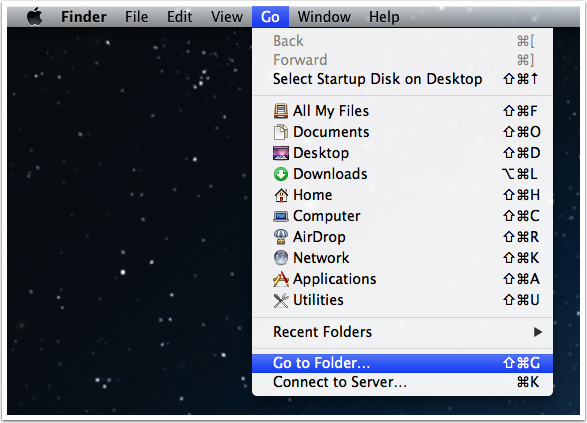
- Expand the Go menu in Apple Finder and select Go to Folder.
- Type or paste the following string in the folder search dialog: /Library/LaunchAgents
- Once the LaunchAgents directory opens up, find the following entries in it and move them to Trash:
- com.MacCleanupPro.agent.plist
- com.MCP.agent.plist
- com.MacCleanupPro.mcphlpr
- com.MCP.mcphlpr
- TechSignalSearch
- TechNetSearch
- Use the Go to Folder lookup feature again to navigate to the folder named ~/Library/LaunchAgents. When this path opens, look for the same entries (see above) and send them to Trash
- Similarly, go to the ~Library/Application Support folder. Locate and move the following entries to Trash:
- MacCleanupPro
- helpermcp
- hlprmcp
- hlprmaccleanuppro
- Click the Go button again, but this time select Applications on the list. Find the entry for Mac Cleanup Pro on the interface, right-click on it and select Move to Trash. If user password is required, go ahead and enter it
- Now go to Apple Menu and pick the System Preferences option
- Select Accounts and click the Login Items button. The system will come up with the list of the items that launch when the box is started up. Locate Mac Cleanup Pro, TechSignalSearch, TechNetSearch, or other suspicious entries there, put a checkmark next to each one, and click on the “-“ button
Use automatic tool to uninstall Mac Cleanup Pro virus from your Mac
When confronted with malicious code like the Mac Cleanup Pro virus on Mac, you can neutralize its toxic impact by leveraging a specially crafted system utility. The Freshmac application (read review) is a perfect match for this purpose as it delivers essential security features along with must-have modules for Mac optimization.
This tool cleans unneeded applications and persistent malware in one click. It also protects your privacy by eliminating tracking cookies, frees up disk space, and manages startup apps to decrease boot time. On top of that, it boasts 24/7 tech support. The following steps will walk you through automatic removal of the Mac Cleanup Pro infection.
- Download Freshmac installer onto your machine. Double-click the Freshmac.pkg file to trigger the installer window, select the destination disk and click Continue. The system will display a dialog asking for your password to authorize the setup. Type the password and click Install Software.
- Once the installation has been completed, Freshmac will automatically start a scan consisting of 5 steps. It scans cache, logs, unused languages, trash, and checks the Mac for privacy issues.
- The scan report will then display your current system health status and the number of issues detected for each of the above categories. Click the Fix Safely button tto remove junk files and address privacy issues spotted during the scan.
- Check whether the Mac Cleanup Pro popups issue has been fixed. If it perseveres, go to the Uninstaller option on Freshmac GUI. Locate an entry that appears suspicious, select it and click Fix Safely button to force-uninstall the unwanted application.
- Go to Temp and Startup Apps panes on theinterface and have all redundant or suspicious items eliminated as well. The The Mac Cleanup Pro malware shouldn’t be causing any further trouble. malware shouldn’t be causing any further trouble.
Remove Dr Cleaner Mac App
FAQ
No, it’s not. Based on its unethical distribution practices and intrusive activity when on board a computer, Mac Cleanup Pro is flagged as a malicious application. Upon superficial inspection, it might seem that its makers are attempting to cash in on the growing demand for Mac optimization through third-party utilities. However, most users don’t even get a chance to familiarize themselves with its purported features prior to the installation, because the scareware infiltrates their systems in a stealthy way that has nothing to do with an informed decision. It mainly arrives as part of software bundles where the installation client’s default mode conceals the cross-promotion.
Remove Dr Cleaner Mac Os
Aside from the surreptitious spreading, Mac Cleanup Pro deluges an infected Mac with pesky reports about performance issues that aren’t actually there. Fabricated scan results and follow-up alerts are the common symptoms of the attack.
Furthermore, the rogue optimizer additionally leaves a footprint in the victim’s web browser by redirecting the Internet traffic to fraudulent sites that say the Mac is infected and push a “cleaner” which is a virus in disguise. In summary, Mac Clean Up Pro is not legitimate. It is a fake system utility that does not belong inside your Mac.
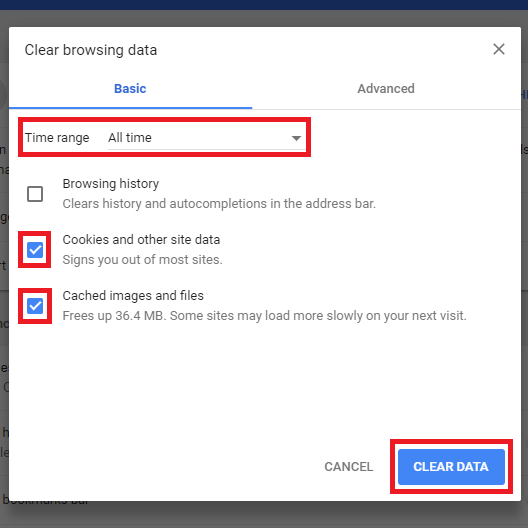
Commonplace updates of the operating system and the installed software are actually accompanied by some degree of background maintenance. However, a more thoroughgoing cleanup would imply certain initiative on the user’s end. macOS Sierra and later versions go equipped with a feature called “Optimize Storage”. You can configure it to remove iTunes multimedia content you’ve already watched and handle email attachments in such a way that they won’t be automatically downloaded onto your hard disk. There is additionally an option to empty Trash automatically.
The system also allows you to empty caches and reduce clutter such as large files and the items you probably don’t need anymore. This type of optimization, though, relies on user involvement and cannot be scheduled or otherwise pre-assigned.
At the end of the day, Apple does perform some tidying as long as you configure your Mac appropriately, but a more tangible effect presupposes your action. One way or another, outsourcing this job to a program like Mac Cleanup Pro is a bad idea. You’re better off sorting through your junk files manually or downloading a trusted cleaner from the official store.
There is no on-demand virus scanner built into your Mac. Nevertheless, Apple delivers decent real-time protection against dubious apps you may want to install, plus its Gatekeeper module will generate an alert if a piece of third-party software has been covertly altered since it was last checked. Software updates also maintain an important layer of security through patches of the recently discovered vulnerabilities.
If you need to run a virus scan at will, though, this is doable with a specially crafted tool made by a reputable AV vendor. Be sure to download a security suite of choice from the official Mac App Store only, otherwise you may unknowingly expose your system to a rogue program like Mac Cleanup Pro.
Contrary to a common opinion, Macs aren’t flawless when it comes to self-optimization. You need to do quite a bit of the tedious cleaning work literally by hand to make sure the system runs smooth at all times. Therefore, a third-party app that automates the process of releasing disk space and boosting the Mac’s performance is more than welcome.
Thankfully, there are plenty of reliable Mac cleaners on the market. From where we stand, the apps called Combo Cleaner, Freshmac and MacBooster are among the top utilities in this niche. In addition to identifying and wiping memory hogs along with junk files you don’t need, these tools boast privacy and security essentials to keep your Mac experience both hassle-free and safe.